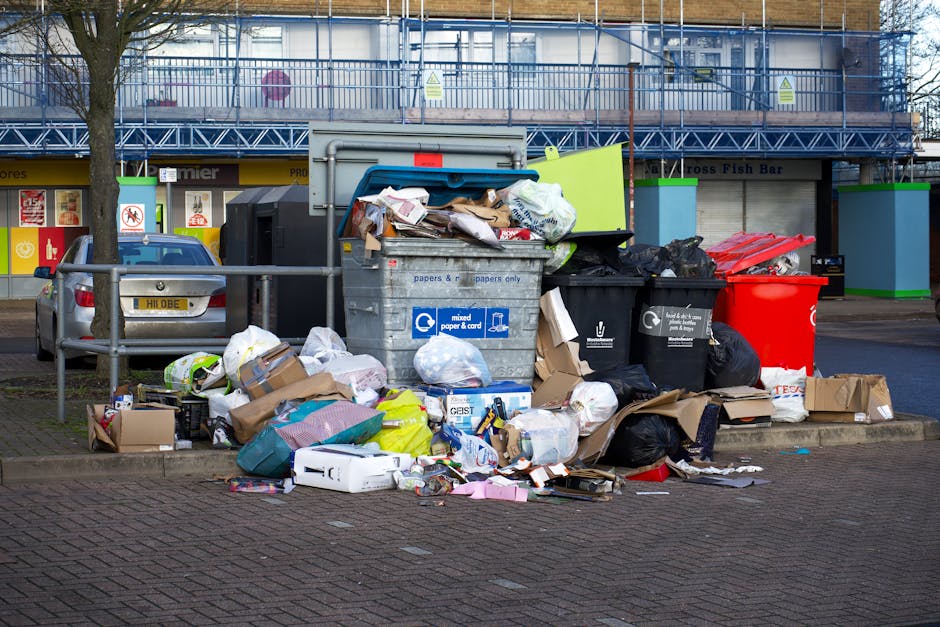
Norbiton Station rubbish removal guide for tight access jobs
If you are trying to organise rubbish removal near Norbiton Station, and the access is awkward, you already know the headache: narrow hallways, shared entrances, limited parking, awkward stair turns, and nowhere obvious for a truck to stop. This Norbiton Station rubbish removal guide for tight access jobs is designed to help you plan the job properly, avoid costly delays, and choose the right removal method without making a simple clearance feel like a small military operation.
In tight-access work, the difference between a smooth collection and a frustrating one often comes down to preparation. What looks like "just a bit of waste" can quickly become a timing issue, a carrying issue, or a safety issue. The good news? With a bit of planning, the right loading approach, and clear expectations, these jobs are usually very manageable. Let's break it down properly.
Why Norbiton Station rubbish removal guide for tight access jobs Matters
Norbiton Station sits in a part of Kingston where homes, flats, converted buildings, and small commercial spaces can all throw up access problems. You may be dealing with basement stairs, a first-floor flat with a narrow landing, a rear alley that barely fits a wheelbarrow, or a property where parking is more of a wish than a reality. In practical terms, that means rubbish removal is not just about lifting waste into a vehicle. It is about getting the waste out of the property safely, legally, and without causing damage.
That matters for three reasons. First, awkward access makes carrying riskier. Second, it can add time if the route is not thought through. Third, it can change the best removal method entirely. A job that looks ideal for a small van might be better suited to a manual loading team, while a job that seems "too small for a professional service" may actually save you a lot of stress if the access is the real problem.
To be fair, tight-access rubbish removal is one of those things people underestimate until they are standing in a hallway with a bulky wardrobe and a staircase that turns at the worst possible angle. We have all seen that moment where everyone goes quiet and thinks, "Right... this is going to be fun." Not fun, exactly. But solvable.
For the reader, the main takeaway is simple: the more restricted the access, the more important the planning becomes. And if the waste includes bulky items such as furniture, appliances, or mixed builder's debris, it helps to understand related services like furniture disposal, furniture clearance, and builders waste clearance before the day arrives.
How Norbiton Station rubbish removal guide for tight access jobs Works
Tight access removal usually follows a simple pattern, but the details matter. The job starts with assessing what needs to go, where it is located, how it moves through the building, and where the waste can be loaded. In a normal open-access property, those questions are easy. In a narrow maisonette or station-adjacent street, not so much.
Typically, the process looks like this:
- Assess the access - check stairs, corridors, door widths, lift availability, parking, and any restrictions around stopping or waiting.
- Sort the waste - separate general rubbish, bulky items, electricals, and anything that may need special handling.
- Plan the carry route - choose the safest route from the item's location to the loading point.
- Protect the property - use care around walls, bannisters, flooring, and shared common areas.
- Load efficiently - move the waste in a way that reduces trips, avoids bottlenecks, and keeps the job moving.
- Finish with sweep-up and disposal - remove loose debris, then sort recyclable and non-recyclable material where appropriate.
In real life, tight-access work often relies more on manpower and coordination than on heavy equipment. A good team will look for the easiest route, not the shortest one. That can mean taking an extra minute to use a service lift, repositioning a van, or splitting a load into safer sections. Small adjustments, big difference.
If your rubbish is mixed with business waste or office items, the approach can shift again. In those cases, business waste removal or office clearance may be the more relevant route, especially where paperwork, packaging, old desks, or confidential materials are involved. For secure documents, there is also confidential shredding.
Key Benefits and Practical Advantages
When tight-access rubbish removal is handled properly, the advantages are not just logistical. They are emotional too, in a very practical British way: less faff, less noise, less damage, less time staring at a pile of junk wondering how it is going to move. Here are the main benefits.
- Less disruption - a planned clearance keeps shared hallways, entrances, and neighbours out of the firing line.
- Lower damage risk - careful carrying and route planning help protect walls, paintwork, stairs, and flooring.
- Better use of space - when access is tight, the right load order makes a job fit more neatly into the available time and space.
- More accurate pricing - clear access information usually leads to a better estimate and fewer surprises on the day.
- Safer manual handling - fewer awkward lifts and fewer rushed turns mean less chance of injury or dropped items.
- Improved recycling outcomes - sorting waste properly before collection can help divert more material from disposal.
Another big advantage is speed of decision-making. If you know access is the main constraint, you can stop wasting time comparing services that are really designed for easy-load jobs. That alone saves a lot of back-and-forth.
For larger clearances where access is awkward but the volume is significant, it may help to compare general clearance options like home clearance, house clearance, or flat clearance. The point is not the label. The point is whether the service can actually cope with your layout.
Who This Is For and When It Makes Sense
This guide is especially useful if you are dealing with one of the following:
- a flat above ground floor with tight stairs
- a converted Victorian or Edwardian property with narrow internal access
- an estate or block with awkward parking and communal entrances
- a rental property between tenancies
- an office, studio, or small business unit near Norbiton Station
- a garage, loft, or storage space with limited manoeuvring room
- bulky furniture that needs to be carried through narrow spaces
It also makes sense when you want a cleaner result than a DIY run to the tip, but the property layout makes DIY much harder than it sounds. That is usually where people realise the real cost is not the rubbish itself, but the time, effort, and potential damage involved in moving it. Truth be told, it is rarely the bin bags that cause the headache. It is the sofa that would not quite fit round the corner.
If the job includes heavy or awkward household items, you may need a specialist approach for appliances or soft furnishings. In those cases, fridge and appliance removal or mattress and sofa disposal can be more appropriate than a general clearance.
And if the job is part of a wider property reset, you may also be looking at loft clearance, garage clearance, or even a full home clearance. Same principle: check the access first, then choose the method.
Step-by-Step Guidance
Here is the practical version, the one you can actually use. It is not glamorous, but it works.
1. Measure the bottlenecks
Start with the tightest points: doorways, stair turns, landings, internal corridors, and any gates or communal access points. If the item is wider than the narrowest turn, it may need to be dismantled or carried in a different orientation. A wardrobe that looks manageable in an empty room can become a stubborn beast once it reaches a staircase.
2. Identify the loading point
The crew needs a place to load waste into the vehicle. If parking is restricted near Norbiton Station, think about where a van can stop safely and legally. If the loading point is far from the property, factor in extra carrying distance. That extra 20 metres sounds small until you are doing it ten times with mixed rubbish.
3. Sort items by weight and fragility
Heavy items should be handled first if they block access, but not before the route is clear. Fragile items should be kept apart from rough waste like broken timber or builder's debris. Mixing everything together usually slows the job down and makes accidental damage more likely.
4. Clear the route
Move coats, shoes, mats, loose cables, and anything else that could snag, trip, or narrow the passage. It sounds basic. It is basic. And yet people forget it all the time.
5. Protect shared areas
If you are in a block of flats or a shared building, keep communal areas tidy and avoid leaving waste where it blocks neighbours. That courtesy matters. It also reduces complaints, which is always nice.
6. Load with a sensible order
Place larger, flatter items first when possible, then fill the gaps with lighter material. The aim is stable loading and fewer handling trips. For mixed loads, this stage often decides whether the clearance feels efficient or chaotic.
7. Ask for disposal clarity
Before the team leaves, it is worth confirming what happens to recyclable items, bulky waste, and anything requiring separate handling. If sustainability matters to you, ask about the provider's recycling approach and whether they can separate streams properly. That is where recycling and sustainability becomes a useful topic, not just a slogan.
Expert Tips for Better Results
These are the little things that make tight-access jobs go more smoothly. They are not dramatic, just very useful.
- Photograph the access points - a few clear photos of stairs, halls, entrances, and parked vehicles can save time when quoting.
- Keep the main walkway free - a clear route is often more valuable than a perfectly sorted pile.
- Disassemble if you can - flat-pack furniture, bed frames, and some shelving units move far easier when broken down first.
- Separate hazardous or awkward materials - do not leave paint, chemicals, sharp metal, or unknown containers mixed into general waste.
- Plan around building access times - especially in blocks with key fobs, shared doors, or management restrictions.
- Think about sound - late morning collections usually cause less friction than very early or evening lifting near residential buildings.
A small human tip, really: if you are unsure whether a piece can turn the corner, do not force it. Reassess. Turn it on its side. Remove a door if needed. That one minute of thinking can save a chipped wall or a bruised shin. Nobody needs that drama.
For property owners dealing with mixed clutter from renovation or refurbishment, it can also help to review what can go in a skip even if you are not hiring a skip. The reasoning is useful: it makes you think about waste categories, materials, and what should stay separate.
Common Mistakes to Avoid
Tight access jobs go wrong in predictable ways. The good news is that most of them are avoidable.
- Underestimating item size - many people guess from memory instead of measuring, and that is where problems start.
- Ignoring parking constraints - if a vehicle cannot stop nearby, the whole job becomes slower and more expensive.
- Not checking the route - a clear front room does not mean a clear hallway, and hallways are where the trouble often begins.
- Mixing everything together - it may look efficient at first, but mixed loads can complicate handling and recycling.
- Forgetting about shared neighbours - noisy lifting, blocked access, or leaving bags in communal spaces can cause avoidable tension.
- Leaving hazardous items unflagged - if a clearance team arrives expecting normal household waste and finds something risky, the job may need to pause.
One of the sneakiest mistakes is booking based on volume alone. Volume matters, yes, but in tight-access jobs the route matters almost as much. A half-full flat with a brutal staircase can be harder than a full garage with direct front access. Funny old thing, but true.
Tools, Resources and Recommendations
You do not need a van full of specialist kit to prepare well. Most of the value comes from planning and a few simple tools.
Helpful tools
- measuring tape for doors, stairs, and items
- camera phone for access photos
- strong gloves for sorting rough waste
- labels or markers for separating keep, donate, recycle, and remove piles
- basic screwdrivers or Allen keys for dismantling furniture
- heavy-duty sacks or boxes for loose debris
Useful service pages to understand the job better
If you are comparing clearance types, it can help to read about waste removal, furniture clearance, and builders waste clearance. Each one suits slightly different waste profiles, and tight access often changes what is realistic on the day.
For larger property clearances, the difference between house clearance and flat clearance can be quite practical. Flats tend to involve more shared access and more lifting through communal routes, while houses may have more space inside but awkward stairs or rear access. The right choice is the one that matches the building, not the marketing headline.
If your job includes sensitive paperwork, locked cabinets, or old records from a business premises, confidential shredding is the safer conversation to have early rather than late.
Law, Compliance, Standards and Best Practice
For rubbish removal in the UK, the main compliance issue is simple: waste must be handled responsibly, and duty of care matters. You do not need to become an expert overnight, but you should make sure the waste is passed to a legitimate collector and handled in a way that does not create avoidable risk for people, property, or the environment.
For tight-access jobs near a busy station area, there are a few practical best-practice points worth keeping in mind:
- Keep access safe - no blocked exits, no unstable stacking, and no unsafe lifting routes.
- Separate hazardous materials early - items such as chemicals, paint, and damaged electricals may need specific handling.
- Avoid damage to shared property - especially in flats, converted buildings, and managed blocks.
- Use trained handling methods - awkward lifting is where injuries happen.
- Respect privacy - especially when clearing offices, archives, or mixed household contents.
It is also sensible to understand a company's public-facing policies before booking. Pages such as health and safety policy, insurance and safety, and payment and security can tell you quite a lot about how seriously the operator takes the job. The details matter. They really do.
If you are checking how a company handles trust and accountability, the policy pages are often more useful than a glossy homepage. A bit less flashy, maybe, but far more revealing.
Options, Methods, or Comparison Table
There is no one perfect method for every tight-access removal. Here is a straightforward comparison to help you choose.
| Method | Best for | Strengths | Limits in tight access |
|---|---|---|---|
| DIY removal | Small amounts of light waste | Low direct cost, full control | Time-consuming, risk of injury, difficult without parking |
| Skip hire | Sites with enough outside space | Convenient for ongoing loading | Often impractical where access or parking is tight |
| Man-and-van style clearance | Bulky or mixed waste in awkward properties | Flexible, hands-on, useful for stairs and narrow routes | Depends on parking and carrying distance |
| Specialist item removal | Fridges, sofas, mattresses, or specific bulky items | Better handling for one-off awkward items | May not suit mixed or large clearances on its own |
In tight-access situations, a manual clearance service is often the most practical. Skip hire can be brilliant in the right setting, but if the road outside Norbiton Station is not friendly to large containers, the theory starts to wobble. The best method is the one that fits the building and the waste, not the other way round.
Case Study or Real-World Example
Imagine a first-floor flat near Norbiton Station with a narrow staircase, one awkward bend, and a small space outside for loading. The resident has a broken wardrobe, two old bedside units, a mattress, and several bags of general rubbish after a move-out.
At first glance, it looks straightforward. A few items. No big deal. But then the wardrobe catches on the bannister, the mattress needs turning halfway down the stairs, and the hallway has no room for staging everything at once. That is the kind of job where planning saves the day.
The practical approach would be:
- measure the wardrobe and the turn at the stair bend
- remove doors or split the wardrobe if possible
- clear the hallway before moving any bulky item
- load the mattress first if it blocks the route
- carry bags last so the route stays open
- check that the loading spot is ready before heavy lifting begins
The whole job becomes calmer when it is sequenced properly. Nothing magical, just organisation. And a little patience. Usually that.
That same approach works for office clearances too. If a small studio or workspace near the station needs desks, chairs, filing items, or mixed clutter removed, the sequence matters even more. In that scenario, office clearance and business waste removal are the relevant services to compare.
Practical Checklist
Use this checklist before the collection day. It keeps things simple, which is exactly what you want when access is tight.
- Measure the narrowest doorway, stair turn, and corridor
- Take photos of the access route and loading point
- Confirm any parking restrictions or loading limitations
- Separate bulky items from loose rubbish
- Keep hazardous items apart and flag them early
- Dismantle furniture where possible
- Clear the walking route inside the property
- Protect communal spaces where needed
- Check whether appliances, mattresses, or sofas need specific handling
- Have contact details ready in case the team needs access clarification
Expert summary: The best tight-access rubbish removals are not the fastest-looking ones; they are the ones that are planned like a narrow-space puzzle. Measure first, carry second, and keep the route simple.
Get a free quote today and see how much you can save.
Conclusion
Norbiton Station rubbish removal in tight access jobs is rarely about brute force. It is about reading the building, understanding the waste, and choosing the right approach before anyone starts lifting. When the route is narrow, the parking is awkward, or the staircase is unforgiving, good planning becomes the real service.
If you remember only one thing, make it this: access changes everything. A careful assessment can save time, reduce stress, and prevent damage. It can also make the difference between a rushed, messy clear-out and a job that feels neatly under control. And that is what most people actually want, even if they say they only want "the junk gone." Fair enough.
When you are ready, compare the type of waste, the access conditions, and the level of handling support you need. From there, the right choice usually becomes obvious.
Frequently Asked Questions
What makes rubbish removal near Norbiton Station difficult?
The main challenge is usually access rather than waste volume. Narrow stairs, shared entrances, limited parking, and awkward loading points can all make a small job more complicated than it looks.
Can tight-access jobs still be cleared quickly?
Yes, often they can. The key is preparation. If the access route, item sizes, and loading point are clear in advance, the work is usually much smoother on the day.
Is a skip a good idea for a flat with narrow access?
Sometimes, but not always. If there is limited outside space or difficult parking, a manual clearance method is often more practical than skip hire.
Do I need to measure the furniture before booking?
It is a very good idea, especially for wardrobes, sofas, mattresses, appliances, and anything that needs turning through a stairwell or hallway.
What should I do with hazardous items?
Keep them separate and mention them early. Paint, chemicals, sharp metal, and unknown containers may need specific handling and should not be mixed with general rubbish.
How do I prepare a flat for rubbish removal?
Clear the hallway, separate the waste into rough categories, check the stair route, and make sure the loading area outside is workable. A few photos can help too.
Can bulky furniture be removed from tight staircases?
Usually yes, but it may need careful handling or partial dismantling. If the route is especially narrow, the team may need to change the carrying angle or break the item down first.
What if my building has shared access or a porter system?
That is fine, but it helps to confirm access times, entry rules, and any restrictions before the collection. Shared buildings often need a little more coordination.
Are business clearances different from household rubbish removal?
Often they are. Offices and commercial spaces can include confidential material, electronics, more packaging, and different waste streams. In those cases, business-specific services are more suitable.
What happens to the rubbish after collection?
That depends on the type of waste and the service used. Good practice is to separate reusable, recyclable, and non-recyclable material where possible, with special items handled appropriately.
How can I avoid extra charges on a tight-access job?
Be accurate about the access, the amount of waste, the item sizes, and any parking restrictions. Surprises on the day are what usually cause pricing issues, not the actual rubbish itself.
When is the best time to book a collection near Norbiton Station?
Any time that gives you enough daylight and access flexibility is useful. Mid-morning often works well for residential jobs because the route is clearer and neighbours are less likely to be disrupted.